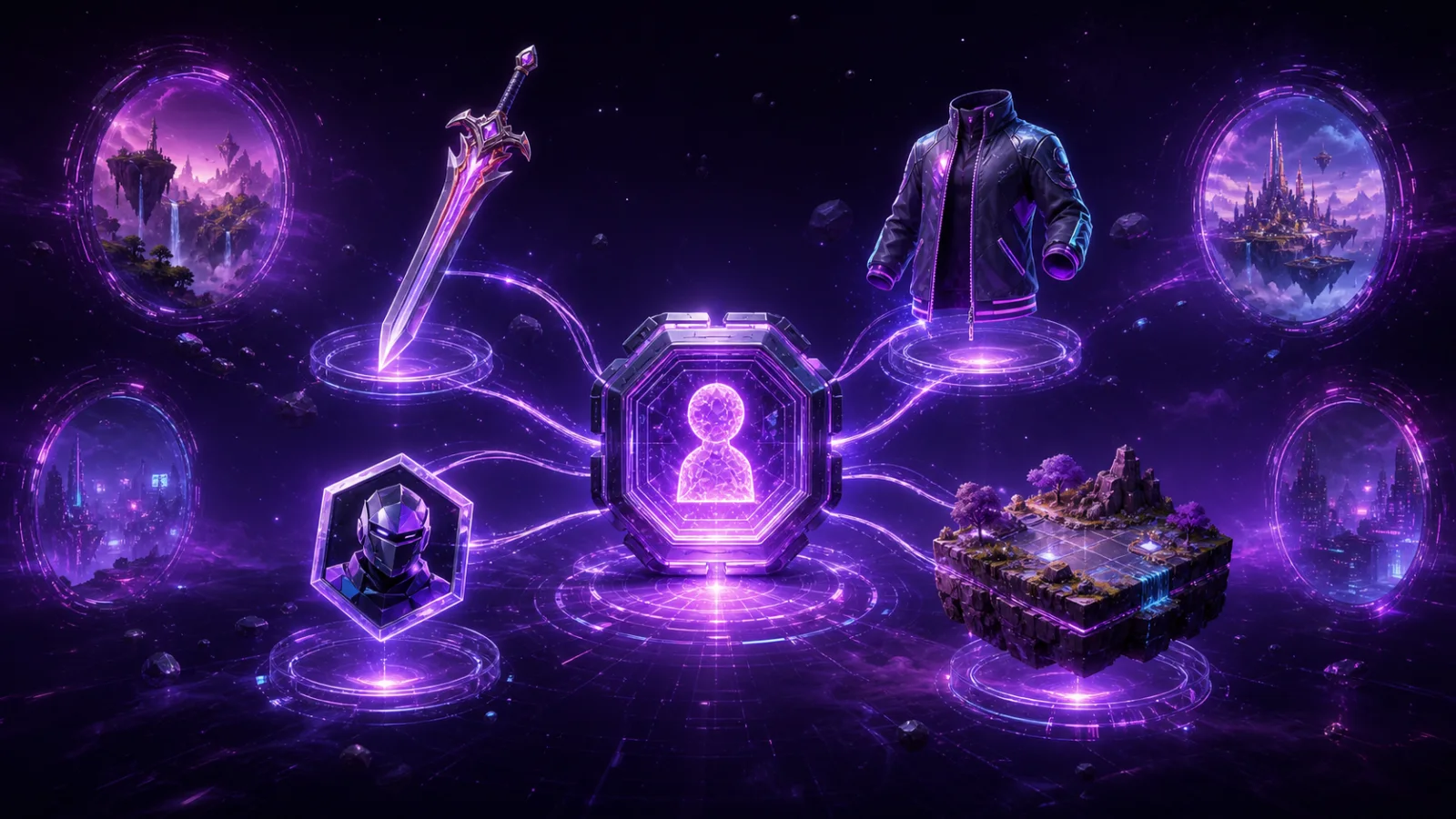
The next wave of blockchain gaming may not begin with another collection of speculative items. It may begin with a question that is much more practical:
What real-world right, experience or relationship should a game make verifiable?
That question is behind the growing interest in real-world assets (RWAs) for games. The asset does not have to be a tokenized bond or a piece of property. In a game context, it can be a tournament ticket, a festival pass, a physical collectible, a creator royalty, a location-based reward or a verified claim on an item that exists beyond one game database.
Avalanche is an interesting place to watch this trend. Its ecosystem combines an EVM-compatible C-Chain with application-specific Avalanche L1s, giving game teams more control over fees, validator requirements, gas tokens and execution rules. At the same time, a new generation of AI-assisted tools is making it much faster for small teams to test these ideas. Claude Fable 5 has made long-running coding agents and vibe-coding workflows a mainstream conversation, but the real opportunity is not one-shot code generation. It is turning an economic idea into a playable, testable prototype before the budget disappears.
RWA does not mean “put finance inside every game”
The phrase RWA is often used too broadly. In financial markets, it usually refers to an on-chain representation of an asset such as a fund, credit instrument, commodity or real estate interest. RWA.xyz’s live dashboard tracks those markets across public chains and currently lists Avalanche among the networks with meaningful tokenized-asset activity.
For games, the more useful starting point is rights and provenance. A game can connect a digital object to something real without turning the entire experience into a trading terminal:
- a ticket can unlock a limited in-game moment after the player attends an event;
- a physical toy or art edition can have a verifiable digital companion;
- a creator can receive an auditable share when a player-made asset is used or resold;
- a guild can prove participation in a tournament, league or campus program;
- a location-based experience can issue a collectible that records where and how it was earned.
These objects become valuable when they make a player’s history, access or contribution more portable. The token is not the product. It is a coordination layer around a product people already want.
Why Avalanche fits the game-specific version of RWA
Avalanche’s architecture gives studios a choice between using the shared C-Chain and deploying an application-specific L1. The Avalanche L1 documentation describes L1s as sovereign networks that can define their own membership and token economics. That matters for games because a studio may want predictable fees, custom transaction rules or a gas experience that feels invisible to players.
The ecosystem is already showing how a game-focused L1 can work. The Henesys explorer describes the MapleStory-linked Avalanche L1 as a chain designed for on-chain item ownership, player-driven economies and real-time gameplay. That is not the same thing as tokenizing a house or a treasury fund, but it is a useful bridge between digital ownership and a recognizable real-world entertainment brand.
The broader RWA layer is also becoming easier to observe. RWA.xyz’s Avalanche view provides a public market map for tokenized assets and their issuers. For game builders, this creates a potential future stack: an Avalanche L1 can run the game economy, while interoperable identity, payments and external asset attestations connect the game to partners outside the client.
The important word is potential. A dashboard number does not prove that a game economy has healthy liquidity, and an L1 does not automatically create player demand. The product still has to be fun, understandable and worth returning to.
Vibecoding changes the cost of experimentation
RWA gaming has historically been expensive to explore. Teams needed smart-contract engineers, backend developers, wallet UX specialists, compliance advice, game designers and a working prototype before they could learn whether players cared.
Vibecoding compresses the early learning loop. A creator can describe a simple economy, ask an agent to scaffold a test scene, connect a mock inventory, simulate a claim and then play the result. The first version should not hold real money. It should answer questions such as:
- Does the player understand what is being claimed?
- Is the real-world connection meaningful or merely decorative?
- Does the reward improve the game loop, or distract from it?
- Can the studio revoke, correct or explain a bad claim?
- What happens when the partner, venue or original game is no longer available?
Anthropic describes Claude Fable 5 as a model for long-running coding and knowledge-work tasks, including agents that can plan, delegate and check their own work. Its launch materials also emphasize ambitious software engineering and prototyping. That makes Fable 5 relevant to this trend, but not because a model can be trusted to invent a financial system unattended. Its value is in helping a small team move through the boring but essential work: scaffolding, test fixtures, admin tools, documentation and repeated prototype revisions.
The four-layer RWA game stack
A credible product should separate four layers instead of putting every promise into one token.
1. The play layer
Players need a compelling activity before they need a wallet. The game should be enjoyable with a test account and simulated assets. If the loop only works when the asset price rises, it is a market experiment—not a durable game.
2. The rights layer
The team must state what the asset proves. Does it prove attendance, ownership, eligibility, authorship or access? Does the right expire? Can it be transferred? Can a partner change the terms? Clear language is more important than a fashionable acronym.
3. The settlement layer
Avalanche can provide the on-chain settlement rail, but the contract still needs limits, monitoring, recovery and a policy for errors. A game should use allowlists, rate limits and reversible admin actions where appropriate. High-value or regulated assets may require identity checks and jurisdiction-specific controls.
4. The trust layer
An oracle, event organizer, marketplace or game server may be responsible for confirming that something happened in the real world. That dependency should be visible. “On-chain” does not mean “automatically true.” It means the recorded claim can be inspected after an authorized system attests to it.
What Fable 5 should and should not automate
Fable 5 is useful for building a sandbox economy: a mock mint, a claim flow, a player inventory, a leaderboard, a marketplace interface or a simulator that tests reward inflation. It can help a one-person studio compare designs quickly and turn feedback into code.
It should not silently choose custody rules, legal terms, security assumptions or player compensation. Those decisions need human review and, where necessary, specialist advice. Every agent action that can move value or change eligibility should be explicit, logged and reversible during development.
The strongest workflow is therefore a loop:
describe the player promise → prototype with fake assets → test with real players → audit the contracts and rights → launch only the smallest useful claim.
This is where vibecoding becomes more than a speed trick. It gives creators enough iteration budget to discover whether the real-world connection creates play, status, belonging or utility before they commit to a permanent economy.
The Avalanche opportunity for one-human studios
The most promising RWA games may come from small teams with a narrow, specific relationship to the real world: a local sports community, a music scene, a collector culture, an educational program or a creator network. They do not need to tokenize everything. They need one defensible claim that players can understand.
Avalanche offers the infrastructure choices to grow that claim from a prototype into a dedicated game network. Fable 5 and other agentic coding tools lower the cost of building the first version. The remaining advantage comes from taste: choosing a real-world connection that makes the game more human, not merely more financial.
The RWA gaming trend will be judged by that standard. The winners will not be the projects with the most tokens or the loudest launch. They will be the games where an on-chain claim makes a player’s time, creativity, access or community history genuinely more valuable.
For more research on game economies, player ownership and AI-native development, follow Sverse News and explore the Sverse ecosystem.